
Cradle of the Unknown
The edge of humanity, facing the enigmatic power of the unexplored.
Concept & Inspiration
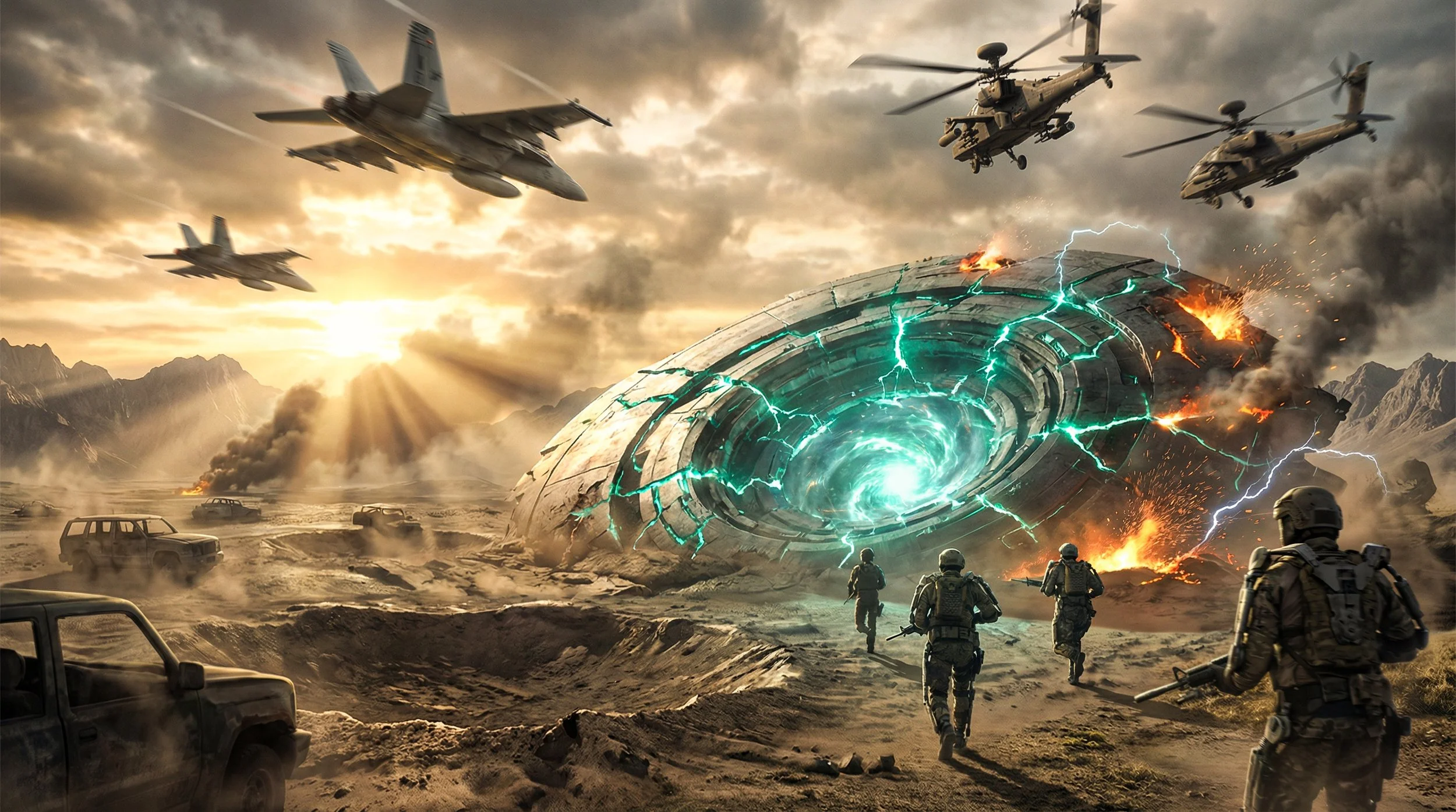
In 2015, I created a composite image inspired by classic World War II cinema—soldiers advancing across vast landscapes toward a single, enigmatic structure. That original concept planted the seed for a decade-long fascination with blending realism, narrative tension, and the surreal. With “Cradle of the Unknown”, I revisited this vision, reimagining it for a modern, cinematic, and futuristic context. The central idea evolved from a cracked egg into a crashed alien spacecraft, a colossal relic of unknown origin, glowing with alien energy. This shift reflects my desire to explore humanity’s relationship with the unknown, the tension between technology, exploration, and the mysteries beyond our world.
Creative Process
The process began with re-examining the original image: what made it impactful, what felt incomplete, and how it could be translated into a contemporary, visually arresting piece. I conceptualised modern military forces in advanced tactical gear approaching an alien crash site; the narrative tension is immediate. To enhance drama and cinematic scale, I introduced FA/18 Super Hornets and Boeing AH-64 Apache gunships flying overhead, volumetric sunlight casting deep shadows, and dynamic dust and smoke effects. The spacecraft’s interior, featuring a glowing energy vortex, became the focal point, symbolising alien technology and unknown power. This combination of elements required meticulous planning to balance realism, storytelling, and spectacle.
Key Considerations:
Scale and Perspective: Maintaining the epic vastness of the landscape was critical to preserve cinematic tension.
Modernisation: Updating soldiers, aircraft, and drones to reflect current technology while retaining a heroic, action-orientated feel.
Alien Technology: The spacecraft’s glowing interior had to be visually compelling, hinting at advanced energy without overcrowding the composition.
Atmosphere: Smoke, dust, and volumetric sunlight were used to create depth, movement, and drama, guiding the viewer’s eye toward the spacecraft and its mysterious core.
Storytelling: Every element, from craters to distant mountains, contributes to the narrative of an unfolding, high-stakes mission.
Execution
I translated this vision into a single, cohesive image using various reference elements and AI, building on the original concept but expanding the scope and detail. Soldiers were positioned in dynamic poses advancing toward the spacecraft, with shadows and motion blur reinforcing realism. The alien craft was designed to feel massive, otherworldly, and partially fractured, revealing the swirling energy vortex inside. Jets and helicopters in motion above added aerial dynamics, while the golden sunset and volumetric rays created cinematic depth and tension. Layering these elements with careful attention to light, shadow, and colour grading resulted in a polished, high-impact image with the feel of a promotional poster or blockbuster movie still.
Reflection
“Cradle of the Unknown” represents a decade of evolution in my conceptual work, from historical war imagery to futuristic, narrative-driven landscapes. Revisiting the original concept allowed me to explore new technologies, storytelling techniques, and cinematic visual language, transforming a simple idea into a multi-layered, immersive scene. This piece demonstrates the power of combining realism with imaginative storytelling, inviting the viewer to step into a world where the familiar, military precision and human courage meet the extraordinary and unknown. It stands as a testament to the creative potential of revisiting old ideas with fresh perspectives and modern tools.
WWII “Eggvasion” (2015)
Cradle of the Unknown (2025)